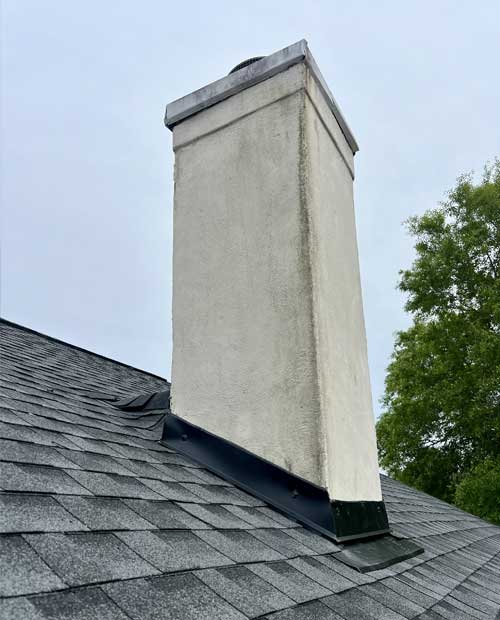
A house four miles from the Atlantic lives a harder life than the same house built inland, and the difference shows up on top of it first. Salt carried in on the wind settles on every exposed surface and holds moisture against metal. Nails, staples, drip edge, valley metal and the flashing around chimneys and vents corrode faster here than the manufacturer ever assumed. A fastener that fails is not visible from the ground, which is why a house can look fine for years and then leak all at once during an ordinary afternoon storm.
Wind is the second force, and it does not attack the middle of a slope. It works on edges. Along the eaves, the rakes and the ridge, air pressure tries to lift the first course and peel back what follows. Starter strip that was installed properly, fasteners placed in the nailing zone rather than high or low, and a sealed ridge line are what keep a slope intact when gusts arrive. These are installation details, not product features, and they are the difference between a covering that survives a named storm and one that does not.
Humidity works more slowly and does more damage than most owners expect. Warm damp air moves up into the attic, meets a cooler surface and condenses on the underside of the deck. Without balanced intake at the soffit and exhaust at the ridge, that moisture never fully leaves. Plywood softens, fasteners lose their grip, insulation mats down and stops working, and the first sign at ground level is often a stain on a bedroom ceiling that has nothing to do with the weather that week.
Then there is sun. Coastal Carolina delivers long hours of direct ultraviolet exposure and sustained summer heat. Asphalt shingles lose granules, which are the layer that protects the mat underneath. Once granule loss is widespread the surface ages quickly, becomes brittle and cracks. Granules collecting in gutters and at downspout outlets are the clearest early warning a homeowner can spot without a ladder.
Storm season sets the deadline for all of it. Anything deferred through spring is still deferred when the first tropical system enters the forecast, and a small unresolved problem becomes an emergency at the worst possible moment. Work that is planned is cheaper, better and done on a schedule you choose. Work forced by a storm is none of those things.
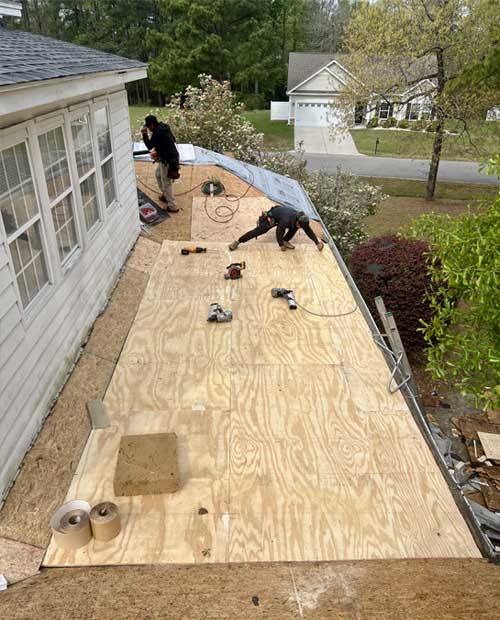
All of this shapes what belongs on a house here. Wind ratings matter more than they do inland. Corrosion resistant fasteners and flashing are worth the small extra cost because they are the components that fail first. Underlayment choice matters because it is the last barrier when wind driven rain gets past the surface. Ventilation has to be designed as a system, with intake and exhaust balanced, rather than added as an afterthought. None of this is exotic, but it is routinely skipped by crews who do not work this coast every week.
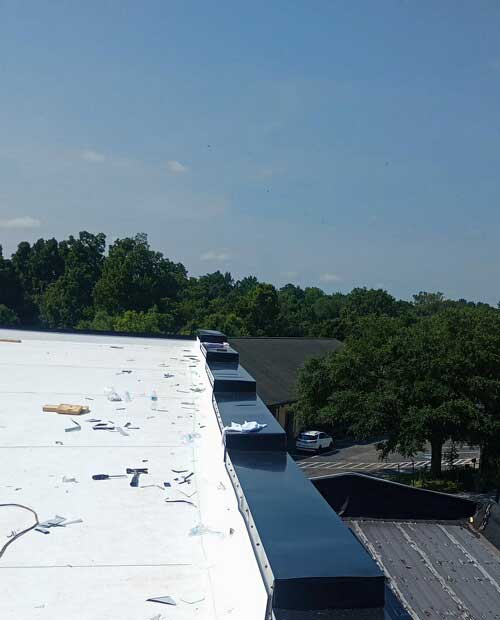
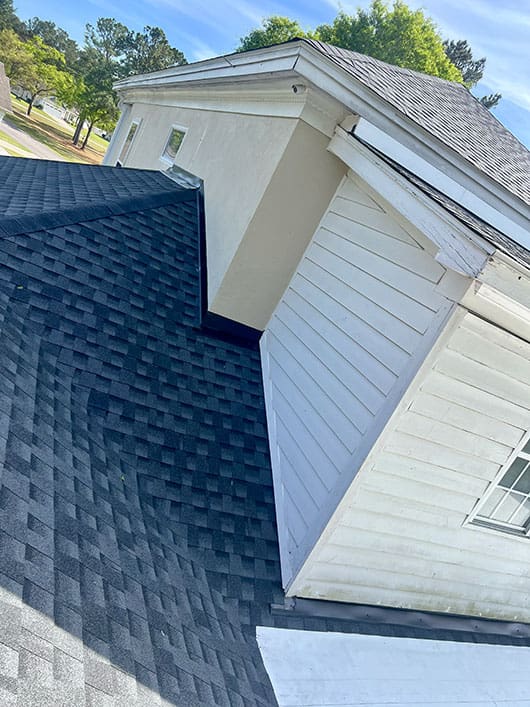
When we inspect a house we start in the attic, because that is where trouble shows before it reaches a ceiling. We check the underside of the deck for staining and soft spots, look at how air is actually moving, then go up top to examine the surface, the penetrations and every point where two planes meet. Valleys, chimneys, sidewalls and vent boots account for a large share of the leaks we are called out to. After that you get a straight answer: what is wrong, what it will take, and whether it is something to handle now or watch for another season.
There is a short list a homeowner can work through from the ground twice a year, and it catches most problems early. Walk the perimeter after a heavy blow and look along the eaves and ridge line for anything lifted, curled or missing. Check the gutters for granules, which look like coarse dark sand. Look up at the underside of any overhang for staining. Inside, check ceilings in the rooms directly under the highest part of the house, and take a look in the attic with a flashlight after a long rain, watching for damp sheathing, daylight at the edges or insulation that has gone flat and dark in one spot.
Two things are worth knowing about timing. First, damage from a storm is easiest to document in the days immediately afterward, while the evidence is fresh and the cause is not in dispute. Waiting weeks makes an insurance conversation harder than it needs to be. Second, age matters as much as appearance. A covering in its late teens on this coast is near the end of its service life even when it still looks acceptable from the street, and planning for that is far less expensive than reacting to a failure in September.
If any of that describes what you are seeing, the next step is simply to have someone competent look at it. An inspection costs nothing, takes about an hour, and ends with a plain explanation of the condition your house is actually in. Call (843) 488-4181 or request a free estimate and we will come out.