
Most leaks and small problems can be fixed with a targeted repair, as long as the damage is in one area and the rest of the shingles are sound. A free inspection from Waccamaw Roofing, LLC finds the real cause and tells you plainly whether a repair will hold.
Salt air, summer storms and hard sun all wear on a house near the coast. A missing shingle, a slow stain on a ceiling, or a loose piece of flashing can turn into rot and mold if it sits too long. The good news is that most of these problems are small when you catch them early.
This page covers the warning signs, the repairs we make most often, what to do the day a leak shows up, and how to tell when a fix is no longer the smart choice. For the full list of what we do, see our roofing services, or call (843) 488-4181.
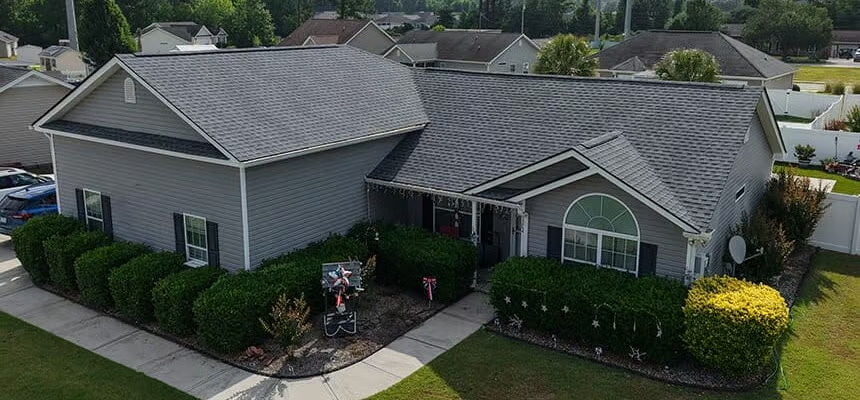
A quick look inside and out is the best way to catch trouble early. You do not need to climb a ladder. Walk the yard with a pair of binoculars, then take a flashlight into the attic after a hard rain. Here is what to look for.
Most leaks start at the places where two surfaces meet or where something passes through. Here are the repairs we are called for most.
Flashing. Flashing is the thin metal that seals chimneys, walls, skylights and valleys. Salt air makes it rust, and old sealant cracks in the sun. When it fails, water runs behind it and into the house.
Vent boots. The rubber collars around plumbing pipes dry out and split over time. A split boot is one of the most common causes of a small, steady leak.
Lost or lifted shingles. Strong wind can break the seal on a shingle and lift it, or tear it off. We replace the missing pieces and reseal the ones around them.
Soft decking. When water gets in for a long time, the wood under the shingles goes soft. We cut out the bad section, put in new wood, and close it back up.
Ridge and edges. Wind works hardest on the ridge and the edges. Loose ridge caps and drip edge are simple fixes that stop bigger damage later.
Flat sections. Porches and low additions often have a membrane instead of shingles. Seams and patches there need their own kind of repair. Our flat roofing page explains how those systems fail.
A leak rarely picks a good time. These steps limit the damage until a repair can be made.
First, protect the inside. Move furniture and electronics out of the way and put a bucket under the drip. If a ceiling is bulging with water, a small hole at the low point lets it drain into the bucket instead of spreading.
Second, take photos. Get the stain, the drip, and anything that got wet. If a storm caused the leak, those photos help with an insurance claim later.
Third, stay off the roof. Wet shingles are slick, and a fall is far worse than a leak. A tarp or temporary patch is a job for a crew with the right gear.
Then call us. We find where the water is getting in, which is often not right above the stain, since water can run along the deck before it drips. If the damage came from a storm, our storm damage page walks through the next steps.
The stain on your ceiling is where the water ends up, not always where it gets in. Water can run along the deck, a rafter or a pipe for several feet before it drips. That is why a patch placed right above the stain often fails.
We start in the attic. With a light, we trace the water marks on the underside of the deck back uphill to the highest point. Dark wood, rusty nail tips and damp insulation all point the way.
Then we go up top and check every spot above that path. We look at the flashing, the vent boots, the valleys and any place where the surface meets a wall. We also look for nails that have backed out and shingles with a broken seal.
Once we find the cause, we show you photos and explain the fix. You see the problem for yourself before you decide anything.
Three things drive the choice: the age of the shingles, how much of the surface is damaged, and the state of the deck underneath.
A younger roof with one problem is a great fit for a repair. A failed piece of flashing or a small patch of lost shingles can be fixed, and the fix can add years of life.
An older surface with leaks in many spots is a different story. So is a deck that has gone soft. In those cases, repairs tend to chase one leak after another, and a roof replacement is often the better use of your money. We show you both paths on a free visit so you can choose with confidence.
A house near the Atlantic lives a harder life than the same house inland. Salt in the air settles on metal parts and speeds up rust. Nails, drip edge and flashing wear out sooner than they would away from the coast.
Wind is the next force. It does not push on the middle of a slope as much as it pulls at the edges and the ridge. Once one shingle lifts, the next gust can peel back the ones behind it.
Humidity and heat work more slowly. Damp air rises into the attic and settles on the cool side of the deck. Without good airflow, the wood stays damp, and the nails lose their grip. Strong sun also bakes the granules off asphalt shingles, which leaves them brittle.
Hurricane season sets a deadline for all of it. Anything left unfixed in the spring is still unfixed when the first storm shows up in the forecast. The Insurance Institute for Business and Home Safety has good, plain guidance on how wind damages homes and how to prepare.
A few simple habits catch most problems while they are still cheap to fix.
Walk around the house twice a year and after any strong storm. Look along the edges and the ridge for anything lifted, curled or missing. Check the gutters for granules, which look like coarse dark sand.
Keep the gutters clear so water can drain off the edge. Trim branches that rub against the shingles or drop debris on them. Inside, glance at the ceilings in the top floor rooms, and take a flashlight into the attic after a long rain.
Finally, have a pro look things over every year or two, and after any named storm. A roof inspection costs you nothing with us, and it often turns up a loose boot or a bit of flashing that takes an hour to fix.
The material, how far the damage spreads, how easy it is to reach, and whether there is hidden damage under the surface. A small shingle fix and a deck repair are very different jobs. A free inspection explains each part before any work starts.
A repair is usually right when the damage is in one area and the rest of the shingles are sound. Replacement makes more sense when problems are spread out, keep coming back, or the deck has gone soft.
Missing or curled shingles, loose flashing, granules in the gutters, stains on ceilings, and a musty smell in the attic. On the coast, salt air and strong wind make early checks even more important.
Yes. Flat sections are usually fixed by patching the membrane, sealing seams, or replacing a damaged area. The repair has to match the system that is already there.
A tarp, roofing tape or sealant can buy time after sudden damage. They are stopgaps, not solutions. Stay off a wet roof and let a crew with the right gear put a tarp up safely.
Poor airflow traps heat and damp air under the deck. That wears out shingles from below and can undo a repair. We check the vents on every visit.
Yes. We work across the Grand Strand, including Conway, North Myrtle Beach, Murrells Inlet and Pawleys Island.
If you think the house needs a repair, the next step is a free, no-pressure inspection. Tell us what you are seeing. We will come out, check the shingles, the flashing and the attic, and tell you what it will take to fix it.
We work across the Grand Strand, from Myrtle Beach to Murrells Inlet and beyond. Call (843) 488-4181 or request a free estimate.
Have a question about your roof? Call or email us for a free inspection.

