Salt air, summer storms, and year-round humidity make flat roofing a smart choice for many coastal South Carolina properties — and choosing the right system matters. This guide from Waccamaw Roofing, LLC, a licensed local roofing contractor, breaks down the most common flat roofing materials, how to decide between repair and replacement, and what to expect from a professional installation. Use it to make a confident, informed decision for your home or business.
Flat roofing in coastal South Carolina has to handle humidity, salt air, intense summer storms, and hurricane season in ways that inland flat roof systems simply do not face, which is why material choice, professional installation, and ongoing preventive maintenance matter so much for Lowcountry properties. Waccamaw Roofing LLC is a licensed local roofing contractor who works with homeowners and property owners across the region and understands how coastal conditions, building codes, and the right roofing materials all come together for a flat roof that protects and performs.
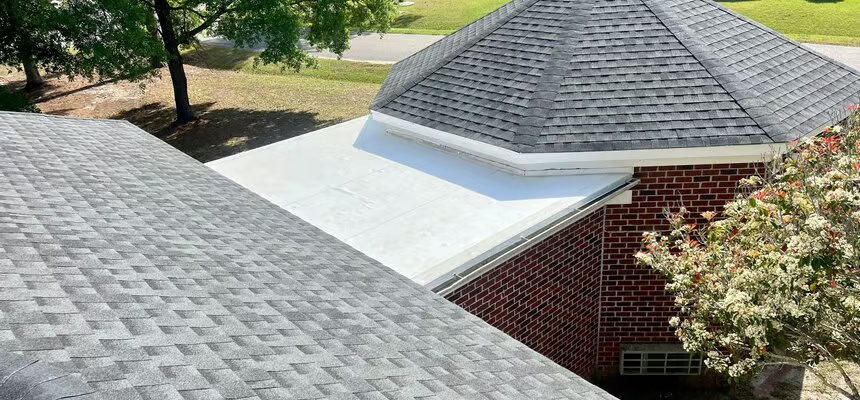
Flat roofing installation gives property owners several strong material options, each suited to different goals. TPO roofing and modified bitumen lead choices for residential flat roof systems, while EPDM roofing, PVC, and built-up roofing (BUR) remain popular on commercial flat roofing projects for scale efficiency and engineered detail.
Match the system to your building's foot traffic, drainage design, and curb appeal goals. Flat roofing contractors at Waccamaw Roofing, LLC can walk you through professional installation timelines, warranty options, and preventive maintenance plans.
The clearest way to choose between flat roof repair and full replacement is to weigh four signals at once: the roof's age, the frequency and location of leaks, the visible surface condition, and whether the insulation or deck underneath is wet. A roofing professional with moisture-scanning equipment can confirm those signals quickly and give you an evidence-based recommendation, often the same day. From there, the right flat roofing path depends on how much of the system is still sound.
Flat roofing materials commonly compared for coastal South Carolina properties include TPO roofing, EPDM roofing, modified bitumen, PVC, and built-up systems. Each option offers different strengths in durability, energy performance, and installation style. A licensed local contractor can help you weigh appearance, longevity, and fit for your specific property before choosing the right flat roofing system for your project.
The choice between flat roof repair and full roof replacement usually depends on the age of the system, the extent of damage, and how widespread moisture issues are. Localized leaks on a younger roof often respond well to targeted repair, while older systems with recurring problems typically benefit from a new installation that protects the property long term.
The scope of a flat roofing project is shaped by the chosen roofing materials, roof size, accessibility, existing layers, and the installation method required. Because every building is different, the best way to plan a realistic budget is to schedule a professional assessment with a licensed local contractor who can outline options tailored to your goals.
Start by searching for flat roofing contractors who are licensed, insured, and experienced with coastal South Carolina conditions. Ask about their flat roof systems knowledge, request references, and confirm they offer a written estimate. Reliable professionals explain installation methods clearly and stand behind their work with strong warranties and ongoing support.
Service life varies by material, climate exposure, and preventive maintenance habits. TPO roofing, EPDM roofing, and modified bitumen each perform differently, but all benefit from routine inspections. A professional installation combined with consistent care helps property owners get the longest performance available from whichever flat roofing system they choose.
Flat roofing performs best when property owners invest in preventive maintenance such as clearing debris, checking seams, and scheduling seasonal inspections. Prompt attention to small issues protects the building envelope and extends the value of professional installation, keeping your flat roof in strong condition year after year.
For commercial building maintenance, flat roofing offers usable space for equipment and straightforward access for service crews. Residential applications can provide modern curb appeal and rooftop living areas. Both property types benefit from quality roofing materials installed by experienced flat roofing contractors who understand low-slope performance.
The best flat roofing systems for low-slope buildings are those engineered specifically for minimal pitch, including TPO, EPDM, and modified bitumen. Proper professional installation with correct insulation, drainage planning, and flashing details ensures long-term protection. Working with knowledgeable flat roofing contractors helps property owners choose the right solution.
Scheduling a flat roofing assessment with Waccamaw Roofing, LLC is the simplest way to get clear, personalized guidance for your coastal South Carolina property. As a licensed local roofing contractor, the team can walk your roof, evaluate materials including TPO, EPDM, and modified bitumen, and share tailored recommendations for roof repair, full replacement, or preventive maintenance — all in one visit.
Bring your questions about flat roof systems, professional installation, and long-term care to the consultation. You'll get honest answers, material options suitable for coastal conditions, and a plan that protects your investment, supports efficiency, and adds lasting value to your home or commercial building.
Reach out today to reserve your assessment and start your project with a trusted local crew.
If you need any helps, please feel free to contact us.

