
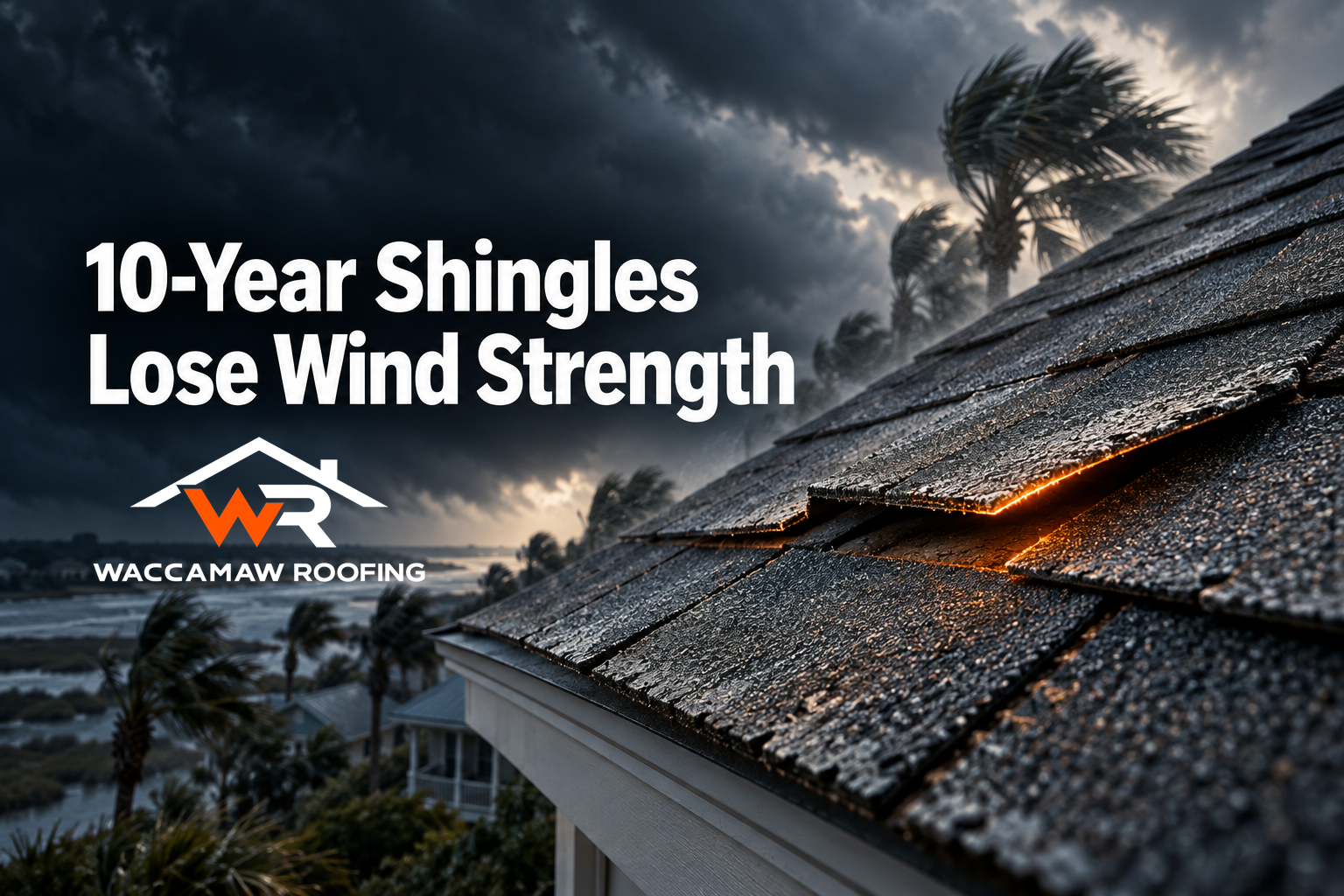
A decade-long field study from the Insurance Institute for Business & Home Safety (IBHS) shows that asphalt shingles, even when they share the same wind rating on day one, can perform very differently after years of sun, temperature swings, and storms. The findings give homeowners, roofers, and insurers a clearer picture of what actually happens to a roof in service, not just on the shelf.
What the Roof Aging Farm Tested
IBHS launched its Roof Material Aging Farm program in 2013 to study how roof coverings hold up against wind, hail, and wildfire exposure as they age naturally in different climates. The program is expected to run through at least 2045, producing one of the most comprehensive long-term datasets of its kind.
For the latest report, titled 10-Year Wind Performance of Asphalt Shingles, IBHS scientists evaluated asphalt shingles that naturally weathered for 10 years at sites in South Carolina, Wisconsin, and Ohio. They compared those against laboratory baseline shingles and against shingles that weathered for five years at the same sites.
The Key Finding: Aging Is Not Uniform
Many products actually saw their wind resistance rise during their first few years in service, before most began to decline between years five and 10. The rate and severity of that decline varied widely by product.
Despite every tested product carrying the industry’s highest wind classification under current standards, the study found dramatically different performance outcomes after aging. The takeaway is that long-term wind performance is influenced by factors beyond a product’s initial wind rating.
Why Sealant Failure Drives Most Wind Damage
IBHS identified unsealing of shingles as the single greatest driver of wind vulnerability. When shingles lose the sealant bond that holds them flat against the roof, they become much more likely to fail in strong winds. Products most prone to unsealing consistently showed the highest probability of wind-related failure.
Multiple age-dependent variables govern the wind performance of asphalt shingles. Some products maintained strong performance after 10 years, while others showed a significant decline. What matters most is whether shingles remain sealed and retain a consistently strong sealant bond over time.
Why Geography Changes the Outcome
Solar radiation levels, temperature swings, and latitude all affected shingle aging and performance.
What This Means for Roof Risk Assessment
The results reinforce that the uncertainty and variability between asphalt shingle products makes it important to know which specific product is installed on a roof when assessing risk. A label on its own does not predict how a roof will behave in a severe thunderstorm or hurricane a decade later.
About the Research Program
The Roof Aging Farm spans multiple U.S. climate zones and is expected to continue through at least 2045. That long horizon allows researchers to connect early-age performance with later-life failures, and IBHS describes the resulting data as one of the most comprehensive datasets available on long-term roofing material performance.
What it means for roofs on the Grand Strand
One of the three test sites in this study was in South Carolina, and IBHS notes that these aging variables can significantly affect how a roof performs during a severe thunderstorm or hurricane. For a coastal roof, knowing which shingle is installed and whether its tabs are still sealed is worth checking before storm season, and again after a storm (see signs of storm damage after a coastal storm).
Waccamaw Roofing provides roof inspections, storm damage repair and roof replacement across the Grand Strand, including Myrtle Beach, Conway, North Myrtle Beach, Murrells Inlet and Pawleys Island. Call (843) 488-4181.
FAQ
How long do asphalt shingles hold their wind rating?
According to the IBHS 10-year study, many products gain wind resistance in their first few years, then most begin to decline between years five and 10. The rate and severity of the decline vary widely by product, even among shingles that share the same initial wind classification.
What causes asphalt shingles to fail in high winds?
IBHS found that unsealing is the single greatest driver of wind vulnerability. When shingles lose the sealant bond that holds them flat to the roof, they become much more likely to fail in strong winds, and products most prone to unsealing consistently showed the highest probability of wind-related failure.
Does climate affect how asphalt shingles age?
Yes. The IBHS study, which compared sites in South Carolina, Wisconsin, and Ohio, found that differences in solar radiation, temperature cycles, and latitude influenced how shingles aged. Performance trends varied by product, roof orientation, and location, showing that climate interacts with shingle design over time.
This article summarizes reporting from ibhs.org.