
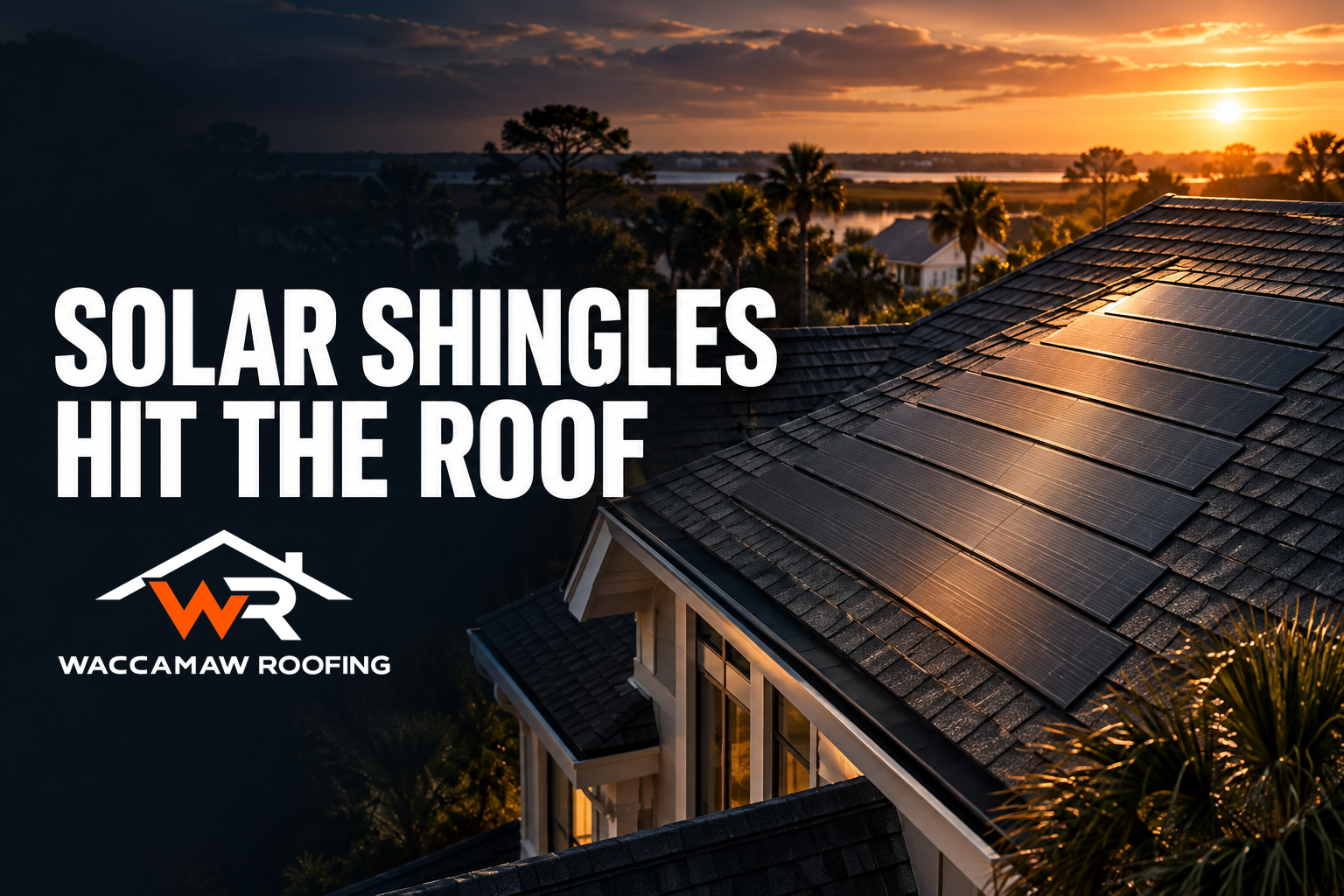

Property owners can now generate electricity while protecting their home under a single roofing system, as CertainTeed introduces Landmark PWR, a solar shingle built on the company’s Landmark asphalt shingle platform. The launch extends a familiar steep-slope roofing line into on-roof solar generation, giving contractors a familiar installation surface paired with a built-in power layer.
Landmark PWR is engineered to replace a section of standard roofing shingles with solar-generating shingles. The product is designed to integrate visually with traditional Landmark shingles so the solar sections blend into the surrounding roof rather than standing out as bolted-on panels. CertainTeed built the system on its existing Landmark shingle form factor, which means contractors already trained on Landmark asphalt installation can move into solar work without learning a new attachment method.
What Landmark PWR actually is
Landmark PWR is a nailable solar shingle, not a rack-mounted panel. Each shingle sits flat against the roof deck and is fastened with nails, the same way a standard asphalt shingle is fastened. The solar layer is built into the shingle body, so there is no separate racking, no standoff mounting and no penetration beyond standard shingle nailing. This is the same architectural approach CertainTeed used when it first entered the solar roofing category with the Apollo II product line, which CertainTeed later rebranded and repositioned as the PWR platform to reflect the shift from a separate solar product into an integrated shingle.
The PWR system is positioned as a direct replacement for a defined area of asphalt shingles, rather than a full-roof solar array. A typical installation covers the most sun-exposed slopes, with the remaining slopes finished in standard Landmark shingles. The two surfaces share the same profile and exposure, which is the design intent: a roof that produces power without telegraphing the residential shingles.
How it differs from a traditional rack-mounted solar array
Rack-mounted photovoltaic systems sit several inches above the roof deck on metal rails and standoffs. Each standoff point penetrates the roof membrane and must be flashed and sealed. Landmark PWR eliminates the standoff layer. Because it is a nailable shingle, it does the same job as the asphalt shingle it replaces while adding a generating surface in the same plane as the rest of the roof.
This construction choice has three knock-on effects:
- Lower profile: the system sits flush with the surrounding shingles, so it does not alter the roofline.
- Wind and weather performance: a flush-mounted shingle does not present the same uplift surface that a rack-mounted panel does, and the system relies on the shingle’s own weather sealing rather than on panel clamps.
- Installation workflow: roofers work with the same nail pattern, underlayment and flashing details they already use on a Landmark roof, with electrical wiring added during the shingle lay-down rather than as a separate trade.
What contractors need to know about installation
Landmark PWR installs during the shingle phase of the job, not as a follow-on trade. The roofer lays the underlayment, then nails the PWR shingles in the designated area in place of standard Landmark shingles, then continues with Landmark shingles on the rest of the roof. Electrical connections are made shingle by shingle as the course goes down.
Because the system uses the same nailing pattern as Landmark asphalt shingles, crews that already install Landmark do not need a new fastening method. They do need to add electrical work to the shingle phase: low-voltage DC wiring is run beneath the shingles and consolidated at an inverter and interconnection point. CertainTeed’s installation training covers the electrical layer, the inverter pairing and the utility interconnection paperwork.
The system is designed to be paired with a standard string inverter or a module-level power electronics configuration. The manufacturer publishes the approved inverter list and the wiring schematic in the product installation guide.
Warranty and product support
Landmark PWR carries a combined warranty that covers both the roofing function and the solar function. The shingle warranty matches the Landmark asphalt warranty CertainTeed has long offered for its steep-slope line, which includes protection against manufacturing defects. The solar power warranty covers the photovoltaic output of the shingles for a defined term, with degradation thresholds spelled out in the warranty document.
CertainTeed has built out contractor support for the new product, including installation training, a certified installer network, and design and engineering support for system layout. The company is selling Landmark PWR through its existing roofing distribution channel, so roofing supply yards that already stock Landmark shingles will also carry the PWR components.
What this means for the steep-slope roofing market
The Landmark PWR launch puts a mainstream asphalt shingle manufacturer into the residential solar roofing category with a product that does not require a separate solar trade. For homeowners, the value proposition is straightforward: a single roofing crew installs a single roofing system that also produces electricity, without rack-mounted panels changing the look of the house. For contractors, the product opens an adjacent revenue line, electrical work, that fits inside the existing roofing workflow rather than sitting beside it as a subcontract.
The launch also reflects an emerging repositioning of the solar roofing category itself. Earlier products in this category separated the roofing function from the solar function, with the solar layer applied on top of the roof. CertainTeed’s move with Landmark PWR is to fold the solar layer into the shingle itself, which is the same direction the rest of the residential solar industry has been moving in, with nailable shingle-style products entering the market from multiple manufacturers over the past several years.
For Waccamaw Roofing homeowners and property owners evaluating roofing options, the practical effect is that a shingle replacement is now a decision point for solar generation as well. A roof that needs to be replaced in any case can be designed, from the first shingle course, as a roof that produces electricity, with the solar section sized to the most exposed slopes and the remaining slopes finished in standard Landmark shingles.
FAQ
What is CertainTeed Landmark PWR?
Landmark PWR is a nailable solar shingle CertainTeed has launched on its Landmark asphalt shingle platform. It replaces a defined area of standard shingles with shingles that generate electricity while performing the same weatherproofing job as the shingles they replace.
How is Landmark PWR different from rack-mounted solar panels?
Rack-mounted systems sit on metal standoffs several inches above the roof and require separate flashing at every penetration. Landmark PWR is a nailable shingle that sits flush with the surrounding roof, so there are no standoffs, no racking and no separate roof penetrations beyond standard shingle nailing.
Do roofing contractors need special training to install Landmark PWR?
The shingle uses the same nailing pattern as standard Landmark asphalt shingles, so existing Landmark installers already know the mechanical layer. CertainTeed’s training covers the added electrical work, inverter selection and utility interconnection steps that turn a shingle job into a solar job.
This article summarizes reporting from roofingcontractor.com.