Metal roofing shipments are projected to grow substantially through 2030, powered by residential replacements, broader standing seam adoption, and rising demand for weather-resilient building products across the country.
The outlook is shaped by a convergence of severe weather, climbing insurance costs, and a sharper focus on lifecycle value rather than upfront price. Residential work, long considered secondary to agricultural and commercial demand, is now the industry’s biggest growth lever, and standing seam systems are expanding fastest within that segment.
What is driving the metal roofing market in 2026?
Four forces are reshaping demand: severe weather events, insurance pressure, sustainability requirements, and shifting architectural preferences. Each one pushes property owners away from repeated asphalt shingle replacement cycles and toward longer-lived roofing systems.
Industry market forecasts show rising global demand for metal roofing as owners prioritize lower total lifecycle cost.
Why is residential replacement the biggest opportunity?
Replacement work, not new construction, is driving the bulk of roofing activity over the coming years. The Metal Construction Association’s 2026 Metal Roof and Wall Market Study, developed in partnership with FMI, projects that residential replacement projects will account for roughly 96% of all residential metal roofing activity through 2030.
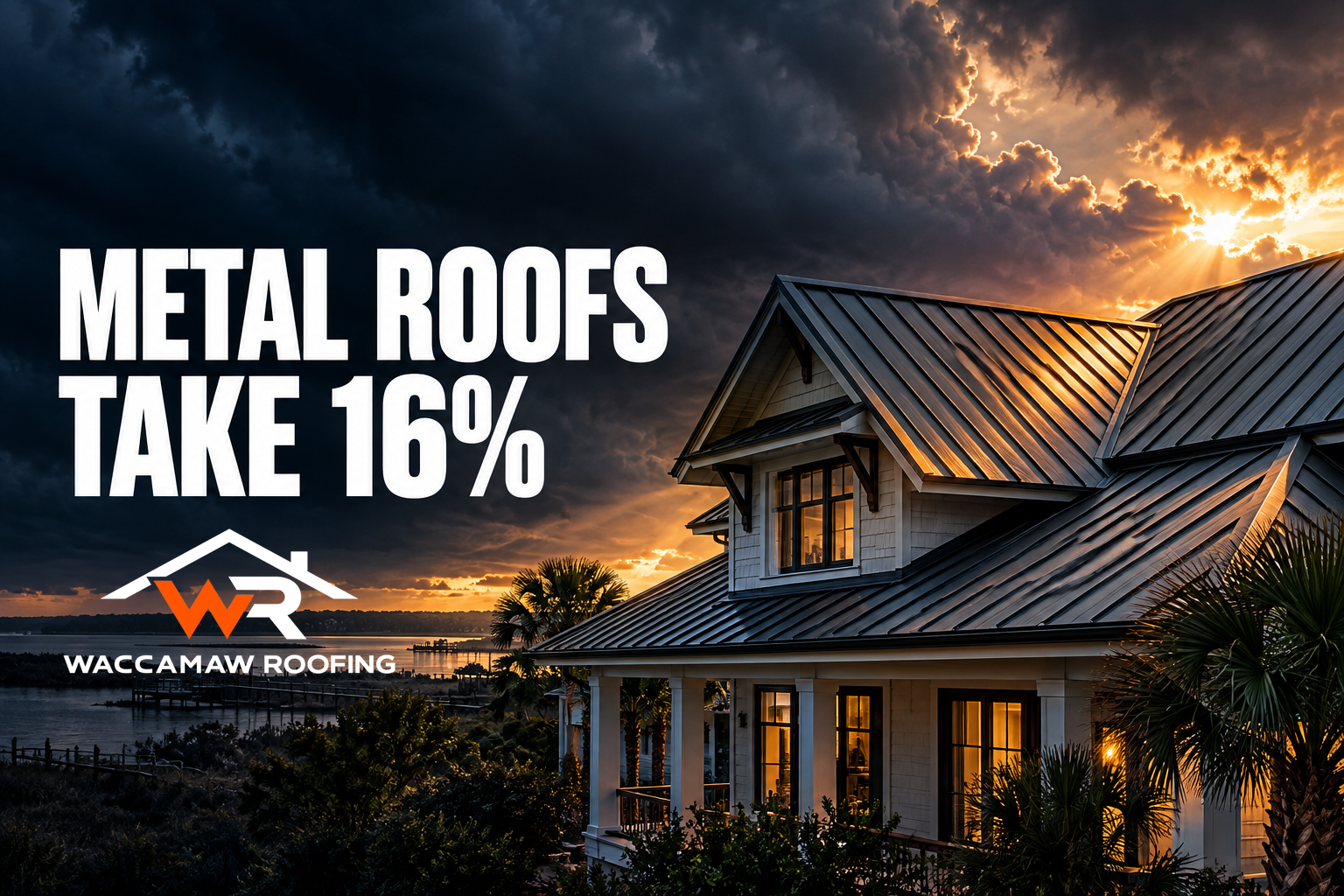
The same research forecasts residential metal roofing capturing about 16% of the total U.S. residential roofing market within the next four years. Many asphalt shingle roofs installed during the early-2000s housing boom are nearing the end of their service lives, which keeps replacement volume high and puts metal directly in front of homeowners comparing options.
Buyers weigh lifecycle cost, maintenance, energy performance, and resilience alongside the initial quote when evaluating roofs.
How is severe weather changing buying behavior?
Hailstorms across the Midwest, hurricanes along the Gulf and Atlantic coasts, and wildfires in the West are pushing owners toward roofing systems rated for wind uplift, hail impact, and fire exposure. Metal’s performance in each of these categories is a primary reason for its rising adoption in both residential and commercial projects.
Insurers are amplifying that shift. Carriers are increasingly using deductibles, actual-cash-value schedules, cosmetic exclusions, roof age restrictions, and mitigation incentives that make metal roofing a more financially attractive choice. As underwriting continues to emphasize risk reduction, metal’s durability advantages become more visible to homeowners weighing a replacement.
Where does standing seam fit in?
Standing seam continues to lead product-level growth. Architects, contractors, and building owners favor concealed-fastener systems for their appearance, weather resistance, and long service life. Multifamily housing, healthcare facilities, schools, office buildings, and retail developments increasingly specify standing seam for both its premium look and its track record.
Residential homeowners are also choosing standing seam for curb appeal and modern architectural styling, not only for durability. Industry reports point to continued expansion of standing seam installations through 2030 in both residential and light commercial markets, with manufacturing capacity scaling to meet that demand in several U.S. regions.
What role do sustainability and energy efficiency play?
Environmental performance is shifting from a preference to a specification requirement. Metal roofing supports sustainability through recyclability, long service life, and reflective coatings that reduce heat absorption and lower cooling loads. Manufacturers continue to invest in cool-roof technologies as energy codes tighten.
Solar compatibility is an emerging driver on top of that. More metal roofing systems are being designed to integrate with photovoltaic installations, letting owners pursue renewable energy without compromising roof performance. Installing solar arrays with an expected lifespan of up to 30 years over shingles that may need replacement in 10 to 12 years can create unexpected removal and reinstallation costs, a comparison that increasingly favors metal.
What challenges could slow growth?
A shortage of skilled installers limits metal roofing growth.
Manufacturers and contractors that expand installer training programs and invest in workforce development are positioned to gain ground, since a shortage of skilled installers remains the most significant constraint on expansion. Companies that align their products and training with the trends reshaping the market will capture a larger share as residential metal roofing reaches roughly 16% of the total U.S. residential roofing market within the next four years.
FAQ
How much of the U.S. residential roofing market will metal capture by 2030?
The Metal Construction Association’s 2026 Metal Roof and Wall Market Study projects residential metal roofing will reach roughly 16% of the total U.S. residential roofing market within the next four years.
What share of residential metal roofing work will be replacements through 2030?
The same MCA study estimates residential replacement projects will account for approximately 96% of all residential metal roofing activity through 2030.
Why are homeowners choosing metal roofing over asphalt shingles?
Buyers are increasingly weighing lifecycle value, weather resilience, energy efficiency, and insurance considerations against upfront cost. Many asphalt shingle roofs from the early-2000s housing boom are also nearing the end of their service lives, putting metal in front of owners comparing replacement options.
This article summarizes reporting from roofingcontractor.com.