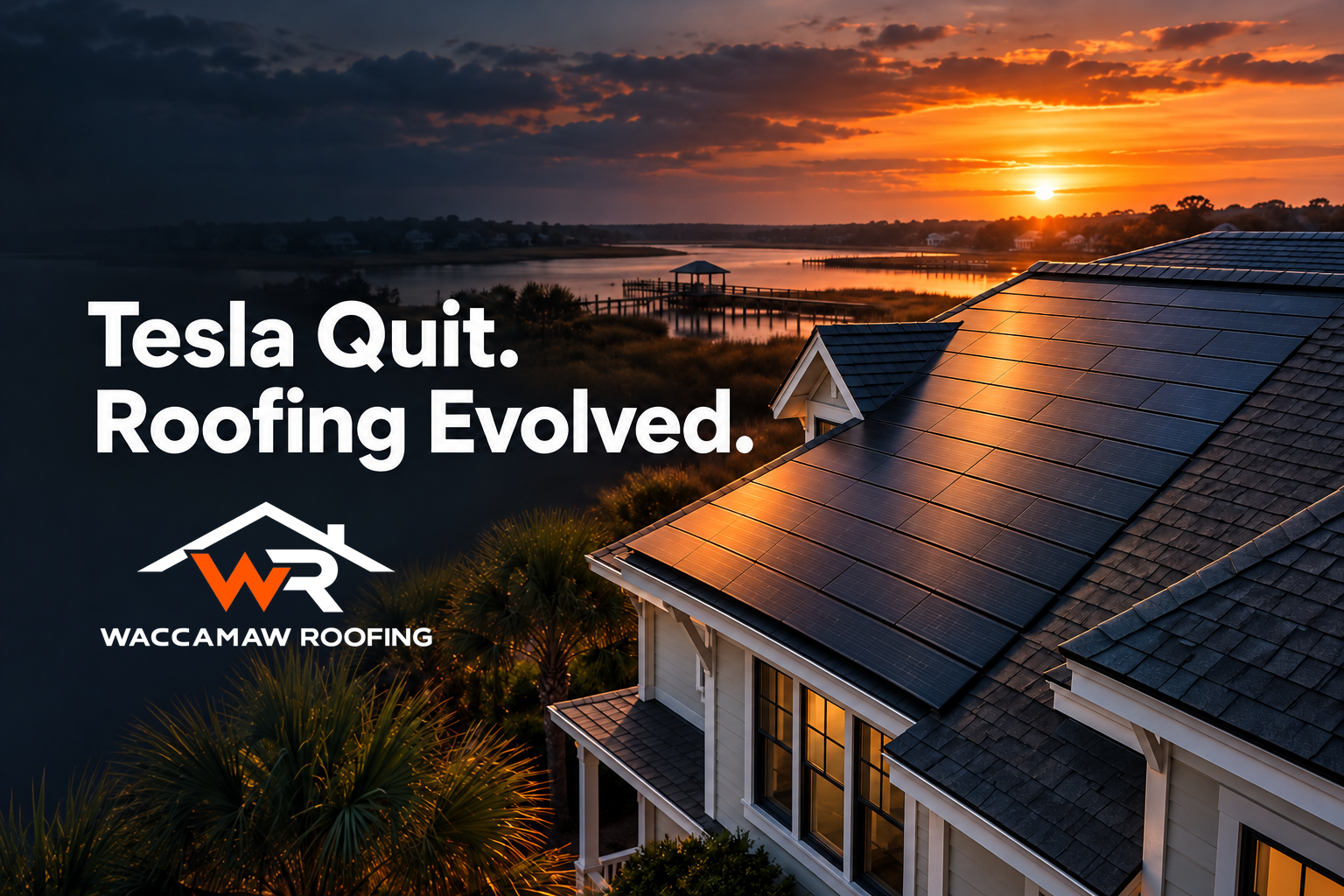
Roofing contractors gained a high-tech pitch, validated solar integration, and a new premium product category from a decade of Tesla’s Solar Roof, even after Tesla pulled the plug in August and removed tiles from its website.
Tesla’s exit from solar roofing
Tesla discontinued its Solar Roof line in August, ending nearly a decade of work to bring integrated solar tiles from SolarCity and into mainstream residential roofing. The company cited high costs, reliability problems, and production shortfalls as reasons the product was financially and logistically unviable. At the time of publication, Tesla stopped taking new orders, pulled roof tiles from its website, and redirected traffic to its standard solar panel products.
Tesla entered the roofing space in 2016 through the widely covered merger that absorbed SolarCity, promising a 21st-century reinvention of the residential roof. The execution and partnership models that followed were uneven, but the impact on the broader roofing trade outlasted the product itself.
What the roofing industry gained
Roofing repositioned as a premium tech product
Tesla’s Solar Roof gave contractors a way to position roofing inside the renewable energy category, but the broader claim that roofing and technology often move together in today’s marketplace is left without a specific number, name, place, or example to support it.
Disruption pushed incumbents to innovate
The launch pulled established players into the integrated solar category. GAF and CertainTeed, both longtime roofing manufacturers with prior solar offerings, made significant investments in new designs within five years of the Solar Roof debut. Both now sell integrated photovoltaic shingle lines: GAF as Timberline Solar and CertainTeed as CertainTeed Solar.
Aesthetic and installation hurdles dropped
Building-integrated solar used to mean bulky, fragile, or visually unappealing panels. Tesla’s glass-tile engineering, hidden wiring, and matching dummy tiles produced a uniform, edge-to-edge roof look that raised the bar for appearance. The product also introduced nail-gunnable solar shingles designed to install like traditional roofing materials, removing the need for specialized racking and electrical setups on every job.
Roofer and solar trades learned to work together
For years, roofers and solar installers stayed out of each other’s way for good reason. Solar contractors frequently drilled into existing roofs, compromising flashing and voiding roofer warranties, while many roofers refused to touch solar equipment because of safety and liability concerns. Tesla’s Solar Roof required a full roof replacement before installation, validating the roofer’s role on every project. Roofing companies responded by training in-house electricians or partnering with local solar installers, capturing revenue that had previously gone elsewhere.
Consumer awareness of solar-ready roofing grew
Replacing a roof that has not yet failed is a harder sell than replacing one that has. The pitch that energy savings could offset the cost over time reset that conversation. Contractors installing solar, adding metal roofing, or applying coatings gain customers who already understand that a roofing system can be paired with solar panels and home battery storage.
What contractors carry forward
Whether the Solar Roof is remembered as a fad tied to favorable energy incentives or a category-defining experiment, contractors gained a usable tool and a story to tell. The pitch today is straightforward: a complete package of roofing, solar, and home battery systems, sold and installed by a single trade that commands a premium for doing all three.
FAQ
Why did Tesla discontinue its Solar Roof?
Tesla ended the Solar Roof line in August, citing high costs, reliability issues, and production shortfalls that made the product financially and logistically unviable. Orders stopped, the roof tiles were removed from the Tesla website, and traffic was redirected to the company’s standard solar panel products.
How did Tesla’s Solar Roof change the roofing industry?
The product helped reposition roofing as a premium tech product, pushed GAF and CertainTeed to launch their own integrated photovoltaic shingles, made solar shingles easier to install, and validated the roofer’s role in solar installations by tying the system to a full roof replacement.
Can homeowners still get a solar roof from another manufacturer?
Yes. GAF offers Timberline Solar and CertainTeed offers CertainTeed Solar, both integrated photovoltaic shingle lines that were developed within five years of Tesla’s Solar Roof debut in response to its market entry.
Related coverage
- Metal Roof Installation Details That Separate Good Contractors from Great Ones
- CertainTeed Launches Landmark PWR Solar Roof
This article summarizes reporting from roofingcontractor.com.